Building an AI-Native UX Curriculum
A fully automated, zero-cost learning ecosystem. Will it be the future of education?

Role
Founder & Systems Architect
Timeline
2025
Target Market
UX-curious career switchers + first-time designers
Positioning
“Try UX” before paying for a bootcamp
The Ask
Remove the $10K barrier to entry for UX.
Core Tech
OpenAI API, AI Avatars, Descript
The Problem
Traditional UX bootcamps have become a gatekeeping mechanism. With costs ranging from $500 to $10,000, high-quality design education is inaccessible to many talented individuals. Static video content also becomes obsolete quickly as AI tools reshape the workflow.
How might we leverage AI to create a living curriculum that helps people validate a UX path, all at zero marginal cost?

The Audience
Neon.school was designed for people who are curious about UX but skeptical about spending thousands before they know if the work “clicks.” The primary users were:
- Career switchers exploring design as a new path.
- Students / early-career professionals who need portfolio output fast.
- Self-taught learners who want structure without tuition.
- Bootcamp shoppers who want confidence before committing.
Native AI Education
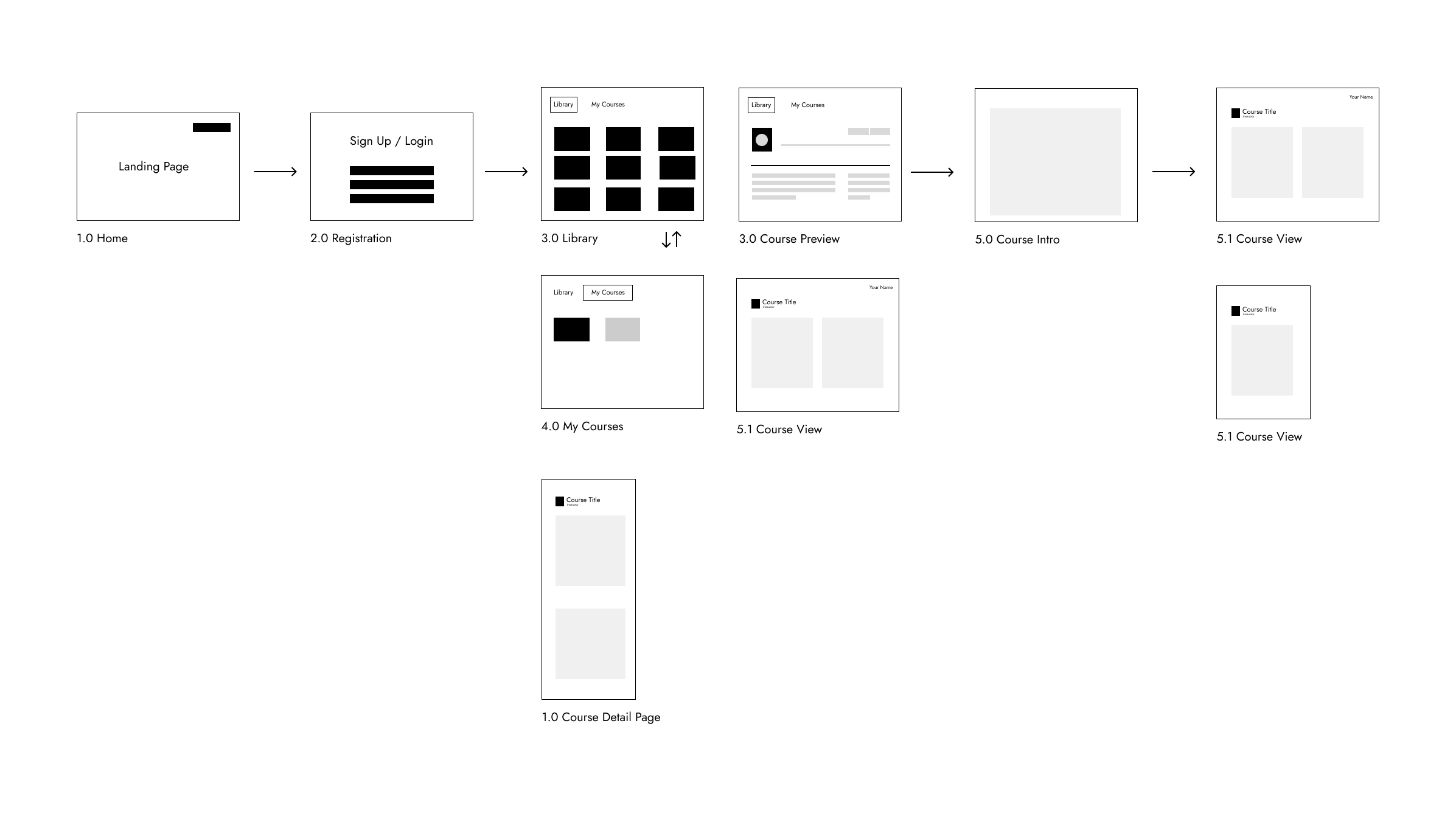
Instead of using AI to write a course, we used AI to create a prompting engine for an entire curriculum. Every lesson, persona, and visual asset is generated via a structured pipeline that keeps the tone consistent and enables rapid iteration.
- Persona Engines: Specialized AI instructors with distinct “career paths” and teaching styles.
- Adaptive Curriculum: Modular lessons updated as new AI tools and workflows emerge.
Validation & Iteration
I ran lightweight user research to ensure the format reduced uncertainty (and didn’t just “teach content”). This included short interviews, usability checks, and sample lesson tests to validate pacing, clarity, and motivation.
- User research: quick interviews + feedback loops on “what would make you continue?”
- Sample tests: pilot learners completed modules and reported confidence shifts.
- Public content: selected lessons were shared openly to attract organic discovery.
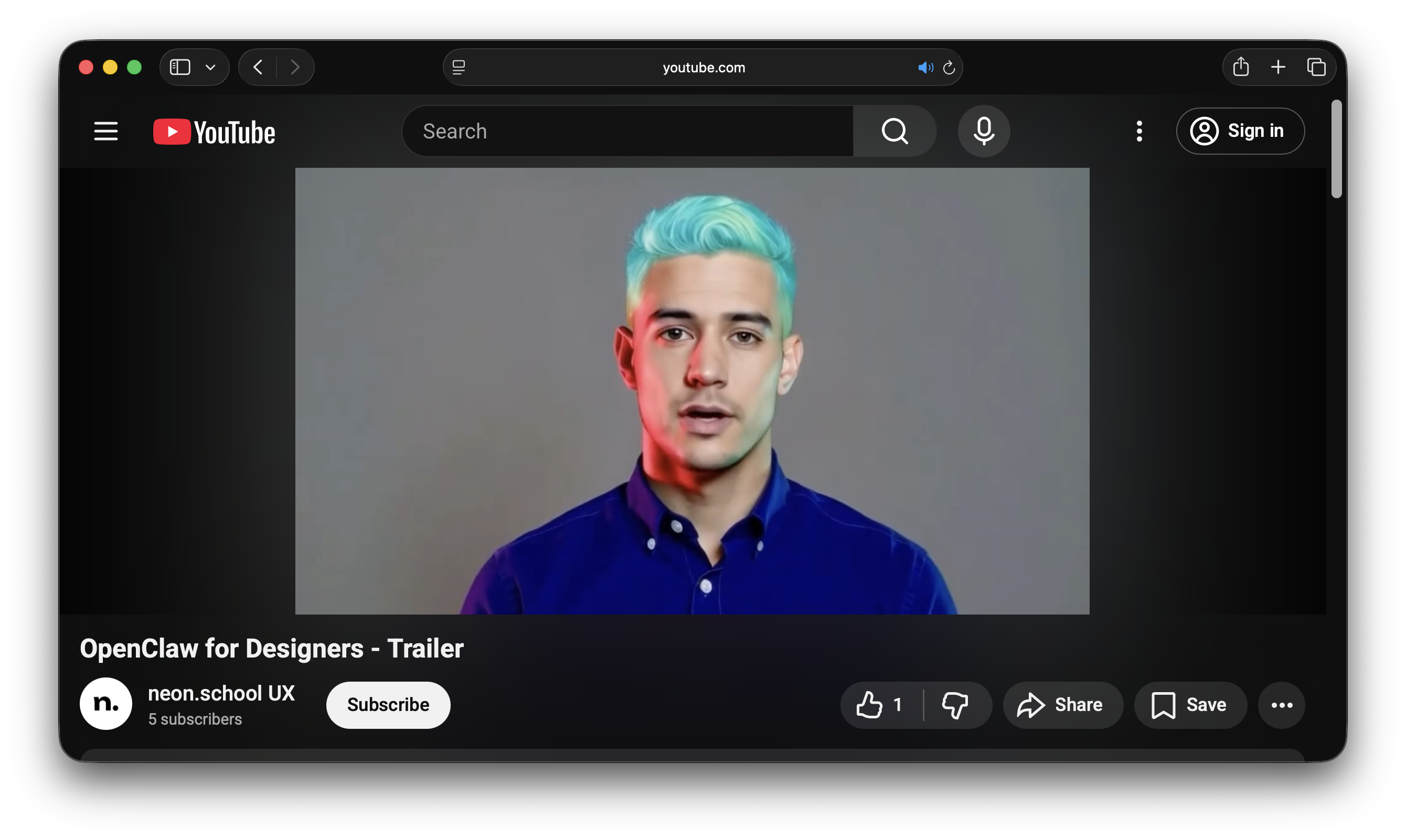
When you can create any type of avatar, why not create one that is on-brand?
The Outcome
Neon.school became a proof-of-concept for AI-native education: one designer acting as a Systems Architect can launch an institution that scales without linear overhead.
- Confidence impact: In early sample testing, 85%+ of learners reported either (a) increased confidence to pursue UX or (b) clarity that UX wasn’t for them before enrolling in expensive programs.
- Reduced risk: the program functioned as a low-stakes “trial runway” to avoid sunk-cost tuition decisions.
- Organic growth: because portions were public, the project continues to attract learners through search and sharing, with potential to grow steadily over time.